Carrier bags also carry an environmental levy, raised to 32 cents a bag from April 2024, paid by manufacturers and importers. That means a new bag maker needs a reliable supply of clean recycled granules, or its own recycling and granulating line, and film blowing that handles recycled material. As an indication for 2026, bag making machines range from about US$8,000 for basic machines to US$40,000 and more for fully automatic servo machines; complete lines with co-extrusion film blowing and granulating are priced per configuration. Buyers include retailers, wholesalers, bakeries, municipalities and industrial packers.
Step 1: choose your products
| Product | Material | Buyers | Notes |
|---|---|---|---|
| Carrier bags | Recycled HDPE or LDPE film | Retailers, spaza shops, takeaways | Compulsory specification, recycled content, levy |
| Flat bags and produce bags | LDPE or HDPE film | Supermarkets, butchers, bakeries | Recycled content rules apply to flat bags |
| Refuse bags and bin liners | Recycled LDPE and LLDPE | Municipalities, contractors, households | Strong demand for recycled material |
| Bread and food bags | Virgin food-grade film | Bakeries, food makers | Food contact rules; recycled content questions |
| Industrial film and sacks | LDPE, LLDPE | Packers, farms, builders | Thicker films, larger rolls |
Refuse bags made from recycled film are a common starting point because the market is large and the raw material can be local waste plastic.
Step 2: the rules for carrier and flat bags
The Plastic Carrier Bags and Plastic Flat Bags Regulations, as amended in 2021, prohibit the manufacture, trade or commercial distribution of carrier and flat bags for use in South Africa unless they comply with the compulsory specification. The amendments set a phased minimum of post-consumer recyclate: 50% from 1 January 2023, 75% from 2025 and 100% from 1 January 2027. Contraventions can bring fines of up to R5 million or imprisonment. Check the current specification for thickness, printing and marking requirements, and how compliance is tested, before you buy machines.
Step 3: the plastic bag levy
An environmental levy applies to plastic carrier bags, collected by SARS from manufacturers and importers. It was raised to 32 cents a bag from 1 April 2024. As a manufacturer you register with SARS for the levy, keep production records and pay it on bags you sell. Include the levy in your pricing, and check the current rate in the budget each year.
Step 4: recycled raw material
For carrier and flat bags, the 2027 target of 100% post-consumer recyclate means your raw material is recycled granules. You can buy them from recyclers, which needs reliable suppliers and quality checks, or make your own from collected and washed film with a recycling and granulating line. Recycled granules vary in melt flow, colour, moisture and contamination, so test each lot and adjust the film blowing settings. Our plastic recycling machine price guide covers granulating lines.
Step 5: equipment
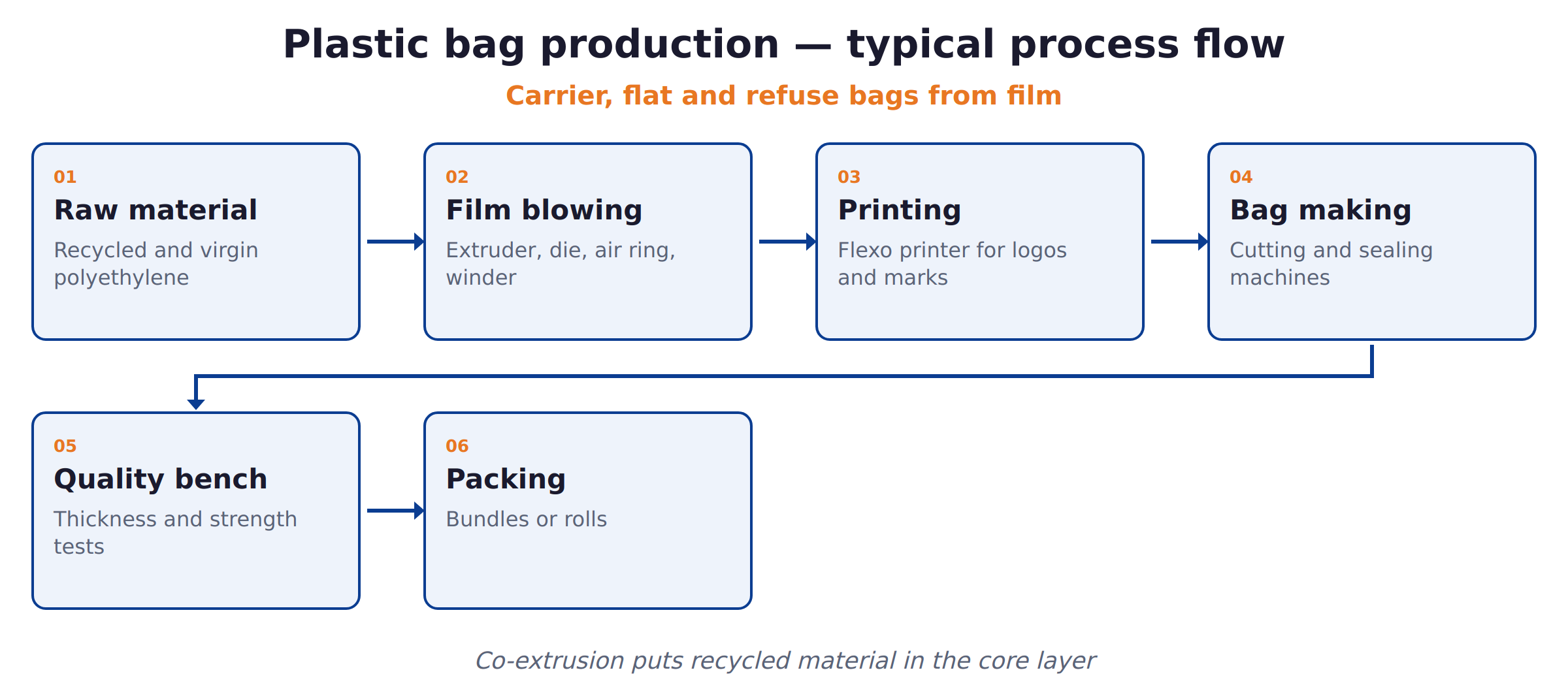
- Film blowing: an extruder, die and air ring that blows a tube of film, with a take-up winder. Co-extrusion (two or three layers) lets you put recycled material in the core and better material outside.
- Printing: flexographic printers for logos and the marks the specification requires.
- Bag making: cutting and sealing machines for T-shirt (vest) bags, flat bags, bottom-seal bags or refuse bags on rolls.
- Recycling (optional): washing, drying and granulating for your own recycled raw material.
- Support: compressed air, chillers, a grinder for scrap, and a quality bench to test film thickness and strength.
Step 6: costs
| What you buy | Indicative price (2026) |
|---|---|
| Basic bag making machine | From about US$8,000 |
| Fully automatic servo bag machine | About US$40,000 and more |
| Film blowing, printing and bag lines together | Quoted per configuration |
| Three-layer co-extrusion with granulating | Quoted per configuration |
Add the building, power supply, installation and working capital for granules. Our plastic bag machine price guide shows the bands, and our guide to bag machine suppliers explains how to compare quotes.
Step 7: buyers
Retailers and wholesalers want consistent bags that meet the specification, printed with their brand, delivered on time and priced well. Many buy through tenders or annual contracts. Municipalities and contractors buy refuse bags in large volumes, often through tenders that ask for local manufacturing and recycled content. Bakeries, butchers and food makers buy flat and food bags. Spaza shops and takeaways buy through wholesalers.
The numbers
Cost per kilogram of bags is raw material (the largest part), electricity for extrusion and sealing, labour, printing ink and plates, the levy for carrier bags, scrap, packaging, delivery and finance. Recycled granules can be cheaper than virgin material but vary in quality, and poor material causes downtime and waste. Price per kilogram or per thousand bags, and add the levy separately for carrier bags.
Worked example: a refuse bag plant in Gauteng
A packaging distributor in Ekurhuleni buys refuse bags from other manufacturers and wants to make its own. It installs a film blowing line suited to recycled LDPE, a refuse bag machine that perforates and rolls bags, and a granulating line fed by washed film from local collectors. It sells to cleaning companies and municipal contractors, and adds carrier bags made from 100% recycled material for wholesalers. The figures are illustrative.
Quality control
Test film thickness at several points across the width, check seal strength and tensile strength, and look for gels, holes and colour variation from recycled material. Keep samples from every production run and record the granule lots used. Retailers and tender buyers may ask for test reports from an accredited laboratory.
Power and building
Film blowing towers need height, and extruders and heaters draw significant power. Check your supply capacity and tariff, plan cooling, and leave space for granule storage, film rolls and finished bags.
Common mistakes
- Carrier bags without recycled content or the specification marks.
- No reliable recycled granule supply.
- Single-layer film lines that struggle with recycled material.
- Forgetting the levy in pricing.
- No quality testing of film and seals.
Selling into tenders
Many refuse bag buyers are municipalities and government departments. Register on the Central Supplier Database, keep tax and B-BBEE documents current, and read each tender's specification for size, thickness, strength and recycled content.
Where CISH fits
We supply complete plastic film and bag lines, film blowing including co-extrusion for recycled material, printing, bag making and granulating, from audited factories in China, sized to your bags and tonnes. CISH ships, clears, installs and commissions the lines on your recycled material, and trains your team. For a single used bag machine, a local dealer is usually the better buy.
Frequently asked questions
Do plastic carrier bags need recycled content in South Africa?
Yes. Carrier and flat bags need a minimum share of post-consumer recyclate, rising to 100% from 1 January 2027.
What is the plastic bag levy?
An environmental levy on plastic carrier bags paid by manufacturers and importers, 32 cents a bag from April 2024.
What machines do I need to make plastic bags?
A film blowing line, a printer if bags are printed, and a bag making machine, plus recycling equipment if you make your own granules.
How much does a plastic bag machine cost?
As an indication for 2026, from about US$8,000 for a basic machine to US$40,000 and more for a fully automatic servo machine.
Which plastic bags are easiest to start with?
Refuse bags from recycled film are a common starting point because demand is large.
Does CISH supply bag lines?
Yes, complete film and bag lines with commissioning and training.