Reference projects, delivery snapshots, and the work behind the brochure.
CISH case studies are built around real project conditions, real delivery trade-offs, and measurable outcomes. Some client names and photos remain confidential, but the operating problems, project structures, and results are real. Where publication approval is still pending, we present the work as anonymised delivery snapshots or under NDA reference calls.
What you will find here
Some projects can be shown publicly with enough detail to be useful. Others are better shared as anonymised delivery snapshots because the operating pattern matters more than the client name. Where a real buying decision is underway, we usually move into an NDA reference format with stronger commercial and technical detail.
Published case studies
Named or approved client projects with enough commercial clearance to show scope, timing, and outcome in public.
Anonymised delivery snapshots
Real projects shown without the client name when the operational pattern matters more than the logo.
NDA reference walkthroughs
Reference calls and supporting project data shared privately when a live buying decision justifies deeper disclosure.
Reference projects we can discuss today.
Each case is built around the four questions a buyer should be able to answer from a reference: what was the business problem, how was the project structured, what operating constraints mattered, and what changed in measurable terms.

Hybrid bottling-line delivery for a growth-stage beverage operation
A 12 000 bph PET bottled-water line where the right answer was neither "import everything" nor "build everything locally." Landed at ~USD 850 000 with local-content above 40%, six to eight weeks faster than a fully imported equivalent.

Concrete block plant designed around local raw-material and utility constraints
A regional developer about to sign for a 12 000 blocks/day plant was advised to downsize to 6 500 — matched to realistic off-take, utility instability, and local service. Capex ~38% lower, utilisation above 78% by month three.

Visibility-led OEE retrofit on an injection moulding cell
Four-machine cell, ~ZAR 280 000 retrofit, three weeks install. Inside 60 days the dashboard surfaced scrap, cycle drift and a slow mould. OEE recovered ~17 points; the proposed USD 320 000 fifth machine was deferred.

Regional maize milling shaped by crop variability, location, and spares strategy
A 60 t/day super-fine maize mill 6+ hours from the nearest engineering hub. Expanded conditioning scope, on-site spares buffer, and remote PLC support drove zero critical-spare stockouts in year one.

UHT and aseptic-fill upgrade on a regional dairy line
Adding shelf-stable UHT and aseptic-fill to an existing chilled line without losing the chilled production window. 18 weeks PO to SAT, retail launch SKU on shelf three weeks before the deadline.

Hybrid press, CNC, and welding cell for a metal-fabrication job-shop
Press-brake, fibre laser, and welding cell specified for a 5-year product-mix horizon — not just the contract on the table. 20 weeks PO to first cutting hour, capex paid back inside 22 months.
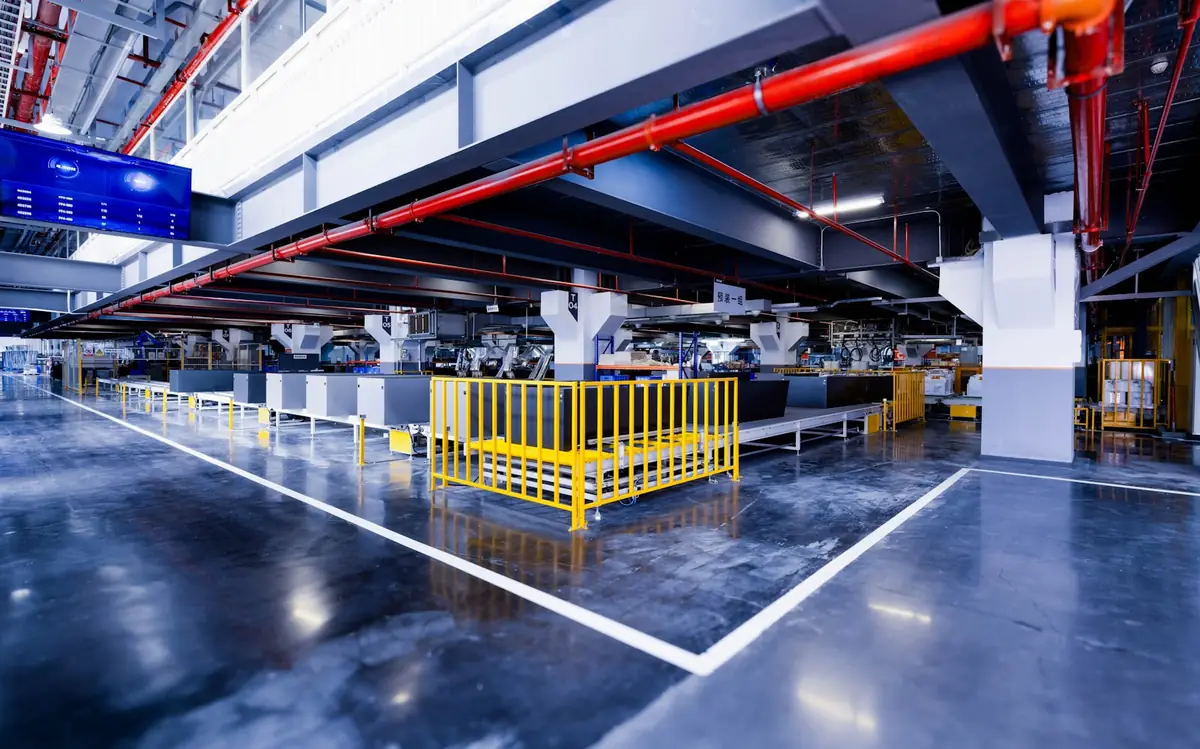
China procurement and FAT rescue for a stalled production-line import
A direct-buy USD 420 000 packaging line was drifting off-spec with 80% of payments already drawn. CISH stepped in mid-project, ran a structured FAT and rework, and recovered the line — net slip reduced from 30+ to ~10 weeks.
Good industrial work is often commercially sensitive.
Many of our clients are expanding capacity, changing sourcing models, improving yield, or reducing costs in markets where competitors notice quickly. That means the public case-study format is sometimes the wrong tool, even when the underlying project is a good fit to show. Rather than publish weak summaries, we prefer to share stronger information under the right commercial conditions.
Our rule: if a case study cannot show real scope, a real problem, and a real result, we do not publish it as a public "success story."
What a strong case on this page should teach you.
Every useful reference on this page should help a buyer understand four things: the business problem, the delivery structure, the operating constraints, and the measurable result. Anything less is just brochure material.
Use this filter: if a reference cannot tell you what problem it solved, how the project was structured, what constraints mattered, and what result changed, it is not a serious buying reference.
The business problem
What the client was actually trying to improve: throughput, launch timing, local content, sourcing risk, support distance, OEE, or total project cost.
The project structure
Whether the answer was turnkey, procurement support, hybrid build, local fabrication, digitalisation, or long-tail maintenance support.
The operating constraints
The parts most case studies skip: utilities, layout, skills, crop variation, local content rules, or a deadline that changed the design choice.
The measurable result
Examples include delivery timing, ramp-up outcomes, visibility gained, cost avoided, or a sourcing split that materially improved project economics.
Questions buyers ask before they request references.
Reference material matters most when someone is moving from general interest to real supplier evaluation. These questions usually surface right before that handoff.
What this section helps with
Deciding whether a public snapshot is enough, or whether your buying stage now justifies an NDA reference walk-through with more operational detail.
While you review reference work, these pages give the strongest context.
How to import a production line from China to South Africa — 2026 guide
12-stage sequence, real cost breakdowns, and the failure modes that cost most.
Buy from China or fabricate locally?
A practical framework for deciding when the right answer is local, imported, or hybrid.
Why we exist and what makes us different
The accountability model, team structure, and delivery approach behind the reference work.
Need references strong enough for a real buying decision?
Tell us your project type, industry, geography, and where you are in the process. We will match you to the best public snapshot, anonymised case, or NDA reference walkthrough we can share.