A complete production line with one accountable delivery partner.
CISH is the Principal Contract Signatory for your production line project. Your contract is with CISH South Africa — one accountable delivery partner replacing the need for a separate freight forwarder, customs broker, and installation contractor. From the first specification to stable output on the floor, we carry the supplier risk so you do not have to.
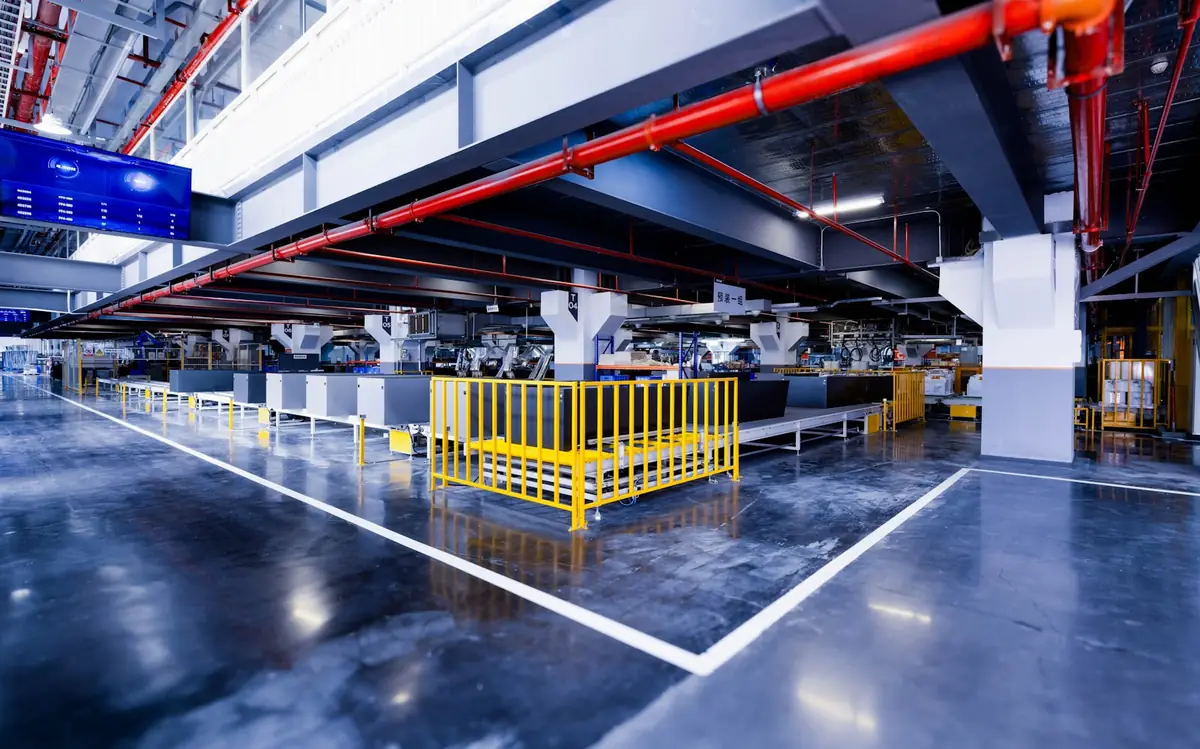
Projects that need one owner from concept to production.
New factories and greenfield lines
For investors and operators who need a full production line planned, sourced, installed, and commissioned without stitching together five different contractors.
Capacity expansions and line replacements
For manufacturers replacing aging equipment or adding a new line where throughput, utilities, and changeovers all need to work together from day one.
China-sourced equipment with local accountability
For teams that want the cost and equipment options of China sourcing but need a delivery partner in South Africa that stays accountable through FAT, shipping, site install, and SAT.
Projects where downtime is expensive
For operations that cannot afford startup drift, late interface surprises, or months of supplier finger-pointing after the line lands.
What "turnkey" actually includes — in writing.
| Stage | What's in scope | Responsible party |
|---|---|---|
| Process design | Capacity model, mass balance, layout, P&IDs, utility loads | CISH |
| Mechanical engineering | Equipment selection, structural steel, conveyors, piping | CISH |
| Automation & electrical | PLC, HMI, MCC, instrumentation, control philosophy | CISH |
| Procurement | Supplier audits, contracts, FAT in China | CISH |
| Logistics | Freight, insurance, customs clearance support | CISH |
| Civil interface | Concrete plinths, anchor bolts, drainage drawings | CISH designs / Client builds |
| Installation | Mechanical, electrical, instrumentation install on site | CISH |
| Commissioning | Cold commissioning, hot commissioning, SAT | CISH |
| Training | Operator + maintenance training, manuals in English | CISH |
| Warranty | 12 months from SAT, on-site response | CISH |
What is NOT in scope: Civil works (we design, your contractor builds) · Building/shed construction · Connection to grid power beyond the MCC · Raw materials and packaging · Operating licences and environmental permits (we provide drawings to support your application).
What success looks like
- Throughput proven at agreed operating conditions
- Stable quality after ramp-up, not only on the first day
- Lower scrap during startup and changeover
- Operators trained to run and clean the line safely
- Documentation, spares, and maintenance ownership handed over clearly
Related services
Some clients start with a full turnkey delivery. Others begin with China Procurement & Sourcing, or add a longer support phase through Commissioning & Maintenance. If you are still deciding how much ownership to keep in-house, we can help you choose the right commercial model.
From call to commissioning — one schedule, one PM.
How to read this timeline: the stages below show a typical medium-complexity turnkey line. Exact duration depends on line category, civil readiness, utilities, factory acceptance outcomes, and how much of the system is being sourced offshore versus built or integrated locally.
Discovery
Free 30-minute call. We understand product, volume, footprint, budget.
Feasibility & spec
Capacity model, two layout options, ROM budget, lead time, risk register. Fixed fee, deductible from project.
Detailed design
Equipment list, drawings, automation architecture, FAT protocol. Sign-off gate.
Build & FAT
Manufacturing in China under CISH PM. FAT signed off — attend in person or by video.
Site prep
Your civil contractor builds plinths to our drawings. CISH supervises remotely.
Install & commission
CISH engineers on site. Cold then hot commissioning. SAT. Operator and maintenance training.
Warranty & ramp
Remote monitoring, on-site visits at ramp inflection points.
Typical project notes
- Medium-complexity lines often land in a 7-9 month delivery window
- Larger or higher-integration projects commonly run 12-18 months end to end
- Civil readiness and utility preparation usually decide whether commissioning starts on time
- FAT closeout quality has a direct impact on site startup speed and rework
What usually moves the schedule
- Speed of feasibility sign-off and scope freeze
- Whether long-lead equipment or imported sub-systems are in scope
- How early civil works, utilities, and access planning begin
- How much punch-list work remains after FAT and before shipment
Integration risk lives with us, not you.
Most line failures are not because one machine was bad. They happen in the seams: upstream/downstream mismatch, utilities undersized, control logic not aligned, or the supplier blaming the installer and the installer blaming the operator. Turnkey exists to remove those seams from your problem list.
- One PM — one master schedule, one escalation path
- One contract — no gaps between supplier scopes
- One FAT protocol — same acceptance logic from design to site
- One integrated warranty — no OEM ping-pong when something fails

Common risk 1
Suppliers optimise their own package, not the full line, so bottlenecks appear only after install.
Common risk 2
Site preparation, utilities, and controls are treated as separate workstreams until delays and rework hit the schedule.
Common risk 3
Acceptance criteria are vague, which means the line “runs” but never reaches the output, quality, or stability expected by operations.
Typical project economics.
Pilot / small line
USD 150k - 500k
Simple packaging, compact processing, entry-level automation
Mid-scale line
USD 500k - 2M
Dry mix, beverage, plastics converting, small FMCG expansion
Large lines
USD 2M - 10M
Full dairy, maize mill, large AAC plant, integrated packaging factory
We will give you a defensible ROM number inside two weeks of the discovery call. Site, building, utilities, and automation brand all move the number — those variables will be in the estimate.
Questions serious buyers ask before they commit.
Turnkey projects usually move quickly from concept to scope, so the important questions are less about brochure features and more about accountability, interfaces, schedule risk, and what happens after handover.
This section is most useful if you are:
- Comparing turnkey against a sourcing-only route
- Trying to understand where project risk really sits
- Planning a line where startup timing matters commercially
- Deciding how much support to keep after handover
A turnkey line is delivered as working production capacity, not crates: specification against your product and volume, OEM selection and audit, factory acceptance testing in China, shipping and customs clearance, installation and commissioning on your site, operator training, and a documented handover. One scope, one accountable partner, one all-in number.
On the quote, buying direct is usually cheaper; for the project as a whole, not necessarily. The quote assumes you already have six capabilities — specification, supplier screening, negotiation, shipping and duties, commissioning, maintenance — and can carry the risk of the project failing. What those cost you, in time and in tuition, is the real comparison: Is buying through CISH more expensive?
Have a line in mind?
Tell us what you want to make, at what volume, and what part of the delivery risk you want off your desk. We will come back with a practical next step, whether that is a feasibility study, a sourcing brief, or a full turnkey plan. Budgeting first? Start with what it costs to set up a small factory in 2026.