Small producers do this by hand; a growing business adds a washer, a fruit cutter, mixing tanks, a filler for chunky products and a capper or sachet machine. The keys are mango supply, because green mangoes are seasonal and you must buy and cure enough for the year, consistent recipes, and food safety: atchar is a low-moisture, salt-and-oil preserved product, but poor hygiene still causes spoilage and complaints. Your premises need a Certificate of Acceptability under R638, labels must meet R146, and packs must show net quantity. CISH supplies, installs and commissions complete sauce, chutney and atchar lines.
Step 1: your products and packs
| Product | Base | Notes |
|---|---|---|
| Mango atchar | Green mango | The best seller; seasonal raw material |
| Mixed atchar | Mango with carrots, chillies, beans | Spreads raw material risk |
| Lemon atchar | Lemons | Different season |
| Hot or mild versions | Spice and chilli levels | Separate recipes |
Packs: glass jars and PET tubs for supermarkets and shops; small sachets for spaza shops and takeaways; bulk tubs for caterers and restaurants.
Step 2: secure mangoes for the year
Green mangoes are bought in season from farms and markets, mainly in Limpopo and Mpumalanga. Producers wash, cut and salt-cure enough fruit in the season to last until the next one, storing cured mango in clean, food-grade tanks or drums. Plan storage space and working capital: buying a year's fruit in a few weeks ties up cash. Mixed and lemon atchar can use fruit and vegetables available at other times.
Step 3: food safety and recipes
Atchar is preserved by salt, oil, spices and low moisture, but contamination during cutting, curing or filling still spoils it. Control:
- Clean raw materials: wash fruit, remove damaged pieces.
- Curing: consistent salt levels and times.
- Oil and spices: fresh, from reliable suppliers.
- Hygiene: clean equipment, staff hygiene, covered containers.
- Filling: clean jars and tubs, sealed lids.
- Records: batch numbers, recipes, supplier lots.
A HACCP-based plan (the regulations in R908 of 2003 apply to some food sectors and retailers often expect HACCP) helps you identify critical steps. Keep a recipe card for each product and weigh every ingredient.
Step 4: licences and labels
- Premises: R638 food premises with a Certificate of Acceptability.
- Labels: R146 requires the product name, ingredients in descending order, allergens if any, net quantity, batch, dates and your details.
- Net quantity: packs must be marked under the Legal Metrology rules (SANS 289) and filled within tolerance.
- Retail: supermarkets usually ask for a food safety audit and barcodes.
Step 5: equipment
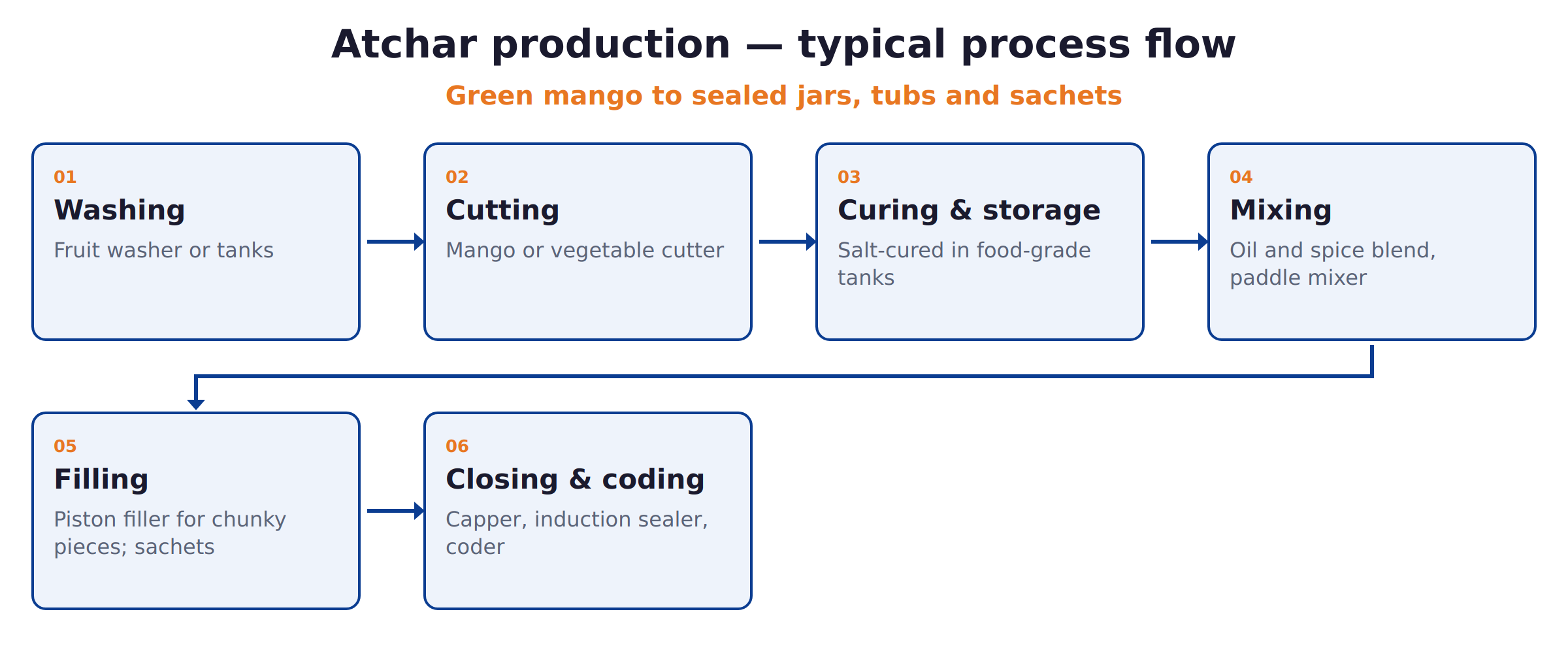
| Stage | Equipment | Indicative price (2026) |
|---|---|---|
| Washing | Fruit washer or washing tanks | Priced per configuration |
| Cutting | Mango cutter or vegetable cutter | Priced per configuration |
| Curing and storage | Food-grade tanks, drums | Priced per configuration |
| Mixing | Mixing tanks or paddle mixer | Priced per configuration |
| Filling | Piston filler for chunky products; sachet machine | Semi-automatic fillers about US$1,000–10,000 each |
| Closing and coding | Capper, induction sealer, coder | Priced per configuration |
Chunky products need fillers designed for pieces in oil, such as piston fillers with large valves; our guide to types of filling machines explains which suit atchar. Complete lines are priced per configuration; our sauce and atchar line guide covers related bands.
Step 6: selling
Atchar sells through spaza shops and wholesalers (sachets and small tubs), independent supermarkets, butcheries and braai outlets, takeaways and caterers (bulk), markets and online. Supermarkets want consistent taste, packs and supply all year.
Step 7: the numbers
Cost per pack is mango (after peel and seed losses), salt, oil, spices, packaging, labour, power, rent, distribution and finance. Oil and packaging are large costs. Price per channel, leaving margin for wholesalers and retailers.
Worked example: a family recipe goes commercial
A family in Polokwane makes mango atchar by hand and sells it at markets and to a few spaza shops. A regional wholesaler wants a steady supply of 5,000 tubs a month. The family leases a small food unit, gets its Certificate of Acceptability, buys a fruit washer, a mango cutter, curing tanks, a paddle mixer, a semi-automatic piston filler and an induction sealer, and contracts mango farmers for the season. They print R146-compliant labels with batch codes. The figures are illustrative.
Common mistakes
- Not buying enough mangoes in season.
- Inconsistent recipes between batches.
- Fillers that clog on mango pieces.
- Poor sealing that lets oil leak.
- Labels without net quantity or batch.
Packaging choices for each channel
Glass jars look premium and protect flavour but are heavy and break; PET jars and tubs are lighter and cheaper to transport; sachets reach spaza shops and takeaways at a low price point. Oil-based products can seep past weak seals, so test lids, induction seals and sachet seams with your product over weeks, not days, especially in summer heat. Use tamper-evident seals for retail, and make sure labels stay stuck when jars get oily.
Spices, oil and consistency
Customers buy atchar for its taste, so consistency is your brand. Buy spices from reliable suppliers, check each lot for colour and aroma, and store them dry and dark. Use the same oil grade every time. Weigh ingredients, record batch numbers and keep a sample of every batch for a few weeks in case a customer complains. Consider a simple sensory check by two staff members before each batch is filled.
Growing beyond the first channel
Start with one or two channels you can serve well, such as local spaza shops and a few butcheries. Add independent supermarkets when your supply is steady, then approach regional chains. Each step needs more stock, more working capital and better records. Supermarkets will also expect barcodes, a food safety audit and product liability insurance.
Seasonal planning
Plan the mango season like a harvest: line up farmers, cutting labour, curing tanks and cash before the fruit arrives.
Pricing your atchar
Work out cost per kilogram of finished atchar from the mango you buy, allowing for losses in peeling, seeds and trimming, then add salt, oil, spices, packaging, labour, energy and distribution. Compare the price per pack with other atchar on the shelves in your target shops. Sachets and small tubs must be cheap enough for daily buyers, while jars can carry a premium if the taste and look justify it. Review prices after each mango season, because fruit costs change. Oil prices also move with world markets, so check them before you agree a price with a wholesaler for a whole year, and build in a review clause where you can.
Where CISH fits
We supply sauce, chutney and atchar lines, washing, cutting, mixing, filling, capping and coding, from audited factories in China, sized to your products and packs. CISH ships, clears, installs and commissions the line on your recipes, and trains your team. For a single small filler, a local supplier is usually the better buy.
When you are ready to compare line suppliers, our guide to tomato sauce and atchar line suppliers sets out who sells what and what to ask before you pay.
Frequently asked questions
How do I start an atchar business?
Secure green mangoes in season, perfect a consistent recipe, set up a premises with a Certificate of Acceptability, and choose packs for your channels.
What licence do I need to make atchar?
A Certificate of Acceptability for your food premises under R638, and labels that meet R146.
How do atchar makers get mangoes all year?
They buy green mangoes in season and cure and store enough fruit to last until the next season.
What filling machine is best for atchar?
A piston filler designed for chunky products in oil, or a sachet machine for small packs.
How much does atchar equipment cost?
Semi-automatic fillers cost about US$1,000–10,000 each as an indication for 2026; complete lines are quoted per configuration.
Does CISH supply atchar lines?
Yes, as part of sauce, chutney and atchar lines with commissioning and training.