PP woven bag machines in South Africa are sold by dealers of imported looms and sewing machines, used machinery traders, Chinese factories that make tape lines, circular looms, laminators, printers and cut-and-sew machines, and turnkey companies that set up a complete sack plant. Your buyers, mainly maize millers, sugar packers, feed and fertilizer makers, decide sack sizes, print and lamination.
Who sells PP woven bag machines
Millers integrating their own sacks, packaging converters, fertilizer and feed companies and entrepreneurs ask for woven bag machines. They meet four supplier types.
| Supplier type | What they sell | Price | Who answers for output | Best fit |
|---|---|---|---|---|
| Dealer of imported machines | Circular looms, sewing heads, cutting machines | Moderate | The dealer, per machine | Converters adding looms |
| Used machinery trader | Second-hand looms and tape lines | Low | Usually nobody, after sale | Buyers with experienced loom technicians |
| Chinese factory, direct | Tape extrusion lines, looms, laminators, flexo printers, cut-and-sew machines | Lowest on the quote | You, after delivery | Buyers with woven-sack experience |
| Turnkey sack plant company | Resin to baled sacks, balanced and commissioned | Between direct and dealer | The turnkey company, at agreed sacks per month | New plants and first lines |
Balance the plant, not the loom
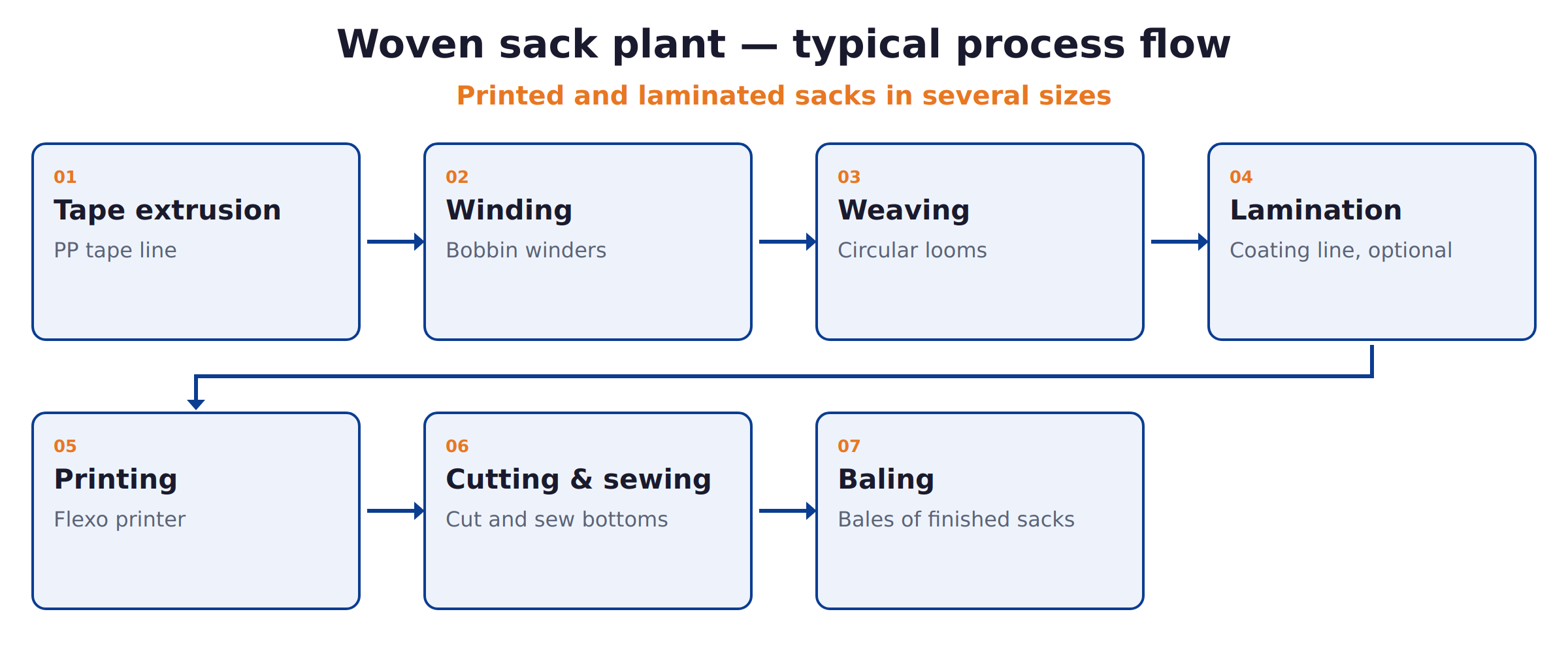
A woven sack plant is a chain: a tape extrusion line makes flat PP tapes, circular looms weave them into fabric tubes, a laminator coats fabric for moisture resistance, a printer applies the brand, and a cutting and sewing machine makes sacks. If the tape line makes more than the looms can weave, tapes pile up; if looms outrun the tape line, they stand idle. The number of looms depends on fabric width and sack mix.
Ask any supplier three things:
- Which sacks: 12.5 kg, 25 kg and 50 kg maize meal sacks, sugar, feed, fertilizer or cement, with sizes, weights and print.
- How many looms the tape line supports at your fabric weight.
- Sacks per month from the whole plant, not loom speed alone.
What to check in the supplier
Tape line quality
Tape strength and consistent denier decide sack strength. Ask about the extruder, the water quench or chill roll, stretching oven and winders, and the tape tensile tests the line can achieve.
Looms
Four- and six-shuttle circular looms are common. Ask for picks per minute, fabric width range and how often shuttles and wear parts are replaced.
Lamination and printing
Food and fertilizer sacks are often laminated and printed. Ask for laminator width and coating weight, and printer colours and registration accuracy.
Where to find woven sack machine suppliers
- Packaging and plastics trade shows bring loom and tape line makers together; check dates with organisers.
- Your sack buyers know which converters supply them and what specifications they set.
- Working plants: visit one making sacks like yours.
- China: most tape lines and circular looms sold in Africa are made in China. Our supplier audit checklist lists the factory checks.
This page does not name woven sack machine suppliers.
How to choose: a 10-point checklist
- Sack mix defined: sizes, weights, print, lamination.
- Sacks per month, demonstrated at handover.
- Tape line output matched to loom count.
- Looms for your fabric widths.
- Lamination for food and fertilizer sacks.
- Printing: colours and registration.
- Cutting and sewing: automatic or manual, bottom types.
- Space: a long bay for the tape line, loom floor and stores.
- Installation, commissioning and training for loom and tape staff.
- Support for shuttles, heaters, screws and sewing heads.
Ten questions to ask
- How many sacks per month does the whole plant make for my mix?
- What tape output does the line give, and how many looms does it support?
- What fabric widths do the looms cover?
- What tape tensile strength can the line achieve?
- Is a laminator included, and at what width?
- What printer, colours and speed?
- Is cutting and sewing automatic?
- Is installation, commissioning and training included?
- How quickly can I get shuttles, heaters and sewing parts?
- Which sack plant runs this equipment, and could I visit it?
Comparing woven sack plant quotes
| Section | What each quote should state |
|---|---|
| Tape extrusion | Extruder, quench, oven, winders, kg per hour |
| Weaving | Number of looms, shuttles, widths, picks per minute |
| Lamination | Width, coating weight |
| Printing | Colours, speed |
| Conversion | Cutting, sewing, bottom type |
| Recycling | Waste tape and fabric pelletiser |
| Utilities | Power, chiller, compressed air |
| Installation and training | Engineer days, operator training |
| Owner's scope | Building, long bay, power, stores |
Make the scopes match before reading the totals; the same-scope comparison shows how.
Common mistakes
- Buying looms before sizing the tape line.
- One fabric width for every sack. Different sizes need different widths.
- No laminator for food or fertilizer sacks.
- No waste recycling. Tape and fabric waste piles up.
- A building too short for the tape line.
Woven sack machine prices in 2026
Indicative, in USD, from our PP woven bag machine price guide:
| Purchase | Capacity | Indicative price (2026) |
|---|---|---|
| Single machine | One loom or one cutting and sewing machine | About US$5,000–20,000 each |
| Entry woven-sack line | Tape line, 4–6 looms, cutting and sewing | About US$50,000–120,000 ex-works |
| Full sack plant, landed | Printed, laminated sacks in several sizes | About US$270,000–640,000 |
| Non-woven bag machine | Shopping bags from bought-in fabric | About US$12,000–45,000 each |
| Bulk bags (FIBC) | 500–1,500 kg jumbo bags | Quoted per configuration |
Packaging rules and duty in South Africa
- EPR applies. Flexible polyolefin packaging is listed in the 2020 EPR scheme for paper, packaging and some single-use products, with amendments to the EPR Regulations in November 2024.
- Not the carrier bag rules. The recycled-content rules for carrier and flat bags target film bags; woven sacks follow EPR and buyer specifications.
- Food contact. Maize meal and sugar sacks touch food, so miller customers will ask for food-contact declarations for resin, masterbatch and inks.
- Sizes matter. 12.5 kg, 25 kg and 50 kg sacks use different fabric widths, so your sack mix sets the loom count.
- Space. A tape line often needs a level bay of 30–40 m including take-up.
- Duty-free machinery. Extruders (8477.20), power looms (8446.21 and 8446.29), flexographic printers (8443.16) and industrial sewing machines (8452.29) carry no general duty. The 15% import VAT is reclaimable; see the import duty guide.
Where CISH fits
CISH is a turnkey sack plant company. We specify tape lines, looms, laminators, printers and conversion machines from audited factories in China, balanced for your sack mix, ship and clear them, and install and commission the plant with sacks per month demonstrated, and your operators trained. For a single loom or sewing machine, a local dealer is often the better choice.
Frequently asked questions
Who sells PP woven bag machines in South Africa?
Dealers of imported looms and sewing machines, used machinery traders, Chinese factories selling direct, and turnkey companies that supply complete woven sack plants.
How much does a woven sack plant cost?
As an indication for 2026, an entry line with a tape line and four to six looms costs about US$50,000–120,000 ex-works; a full printed and laminated sack plant about US$270,000–640,000 landed.
How many looms does one tape line feed?
It depends on tape output, fabric width and weight. Ask each supplier to balance the tape line and loom count for your sack mix.
Do woven sacks need recycled content?
The recycled-content rules target film carrier and flat bags. Woven sacks fall under EPR for packaging and your buyers' specifications.
Is woven sack machinery duty-free?
Extruders, power looms, flexo printers and industrial sewing machines carry no general duty in SARS's 2026 tariff. Import VAT of 15% applies.
Does CISH sell single looms?
No. We supply complete woven sack plants, installed and commissioned. For a single loom, a local dealer is usually the better route.