As an indication for 2026, a brine block ice machine of about 10 tonnes a day costs about US$10,000–45,000 ex-works; tube ice and flake ice plants, which need bagging and cold storage, are priced per configuration. Every type needs drinking-quality water meeting SANS 241 if it touches food or drink, a food premises with a Certificate of Acceptability under R638, refrigeration work by SAQCC Gas authorised persons, and a lot of electricity. CISH supplies, installs and commissions complete ice plants with cold storage.
The short answer
| Block ice | Tube ice | Flake ice | |
|---|---|---|---|
| Shape | Large blocks, often 5–50 kg | Hollow cylinders | Thin, soft flakes |
| Main customers | Fishing, fish trade, abattoirs, rural and event supply | Bottle stores, retail, events, hospitality | Fish counters, meat and poultry plants, bakeries, concrete |
| Melts | Slowest | Moderate | Fastest |
| Looks | Cloudy unless made clear | Clear, attractive | Opaque |
| Packing | Blocks, or crushed and bagged | Bagged 2–10 kg | Bulk, bins |
| Storage | Ice store | Cold room for bags | Insulated bin near use |
| Typical plant | Brine tanks and moulds | Tube evaporator, cutter, bagger | Drum evaporator with scraper |
How each plant works
Block ice
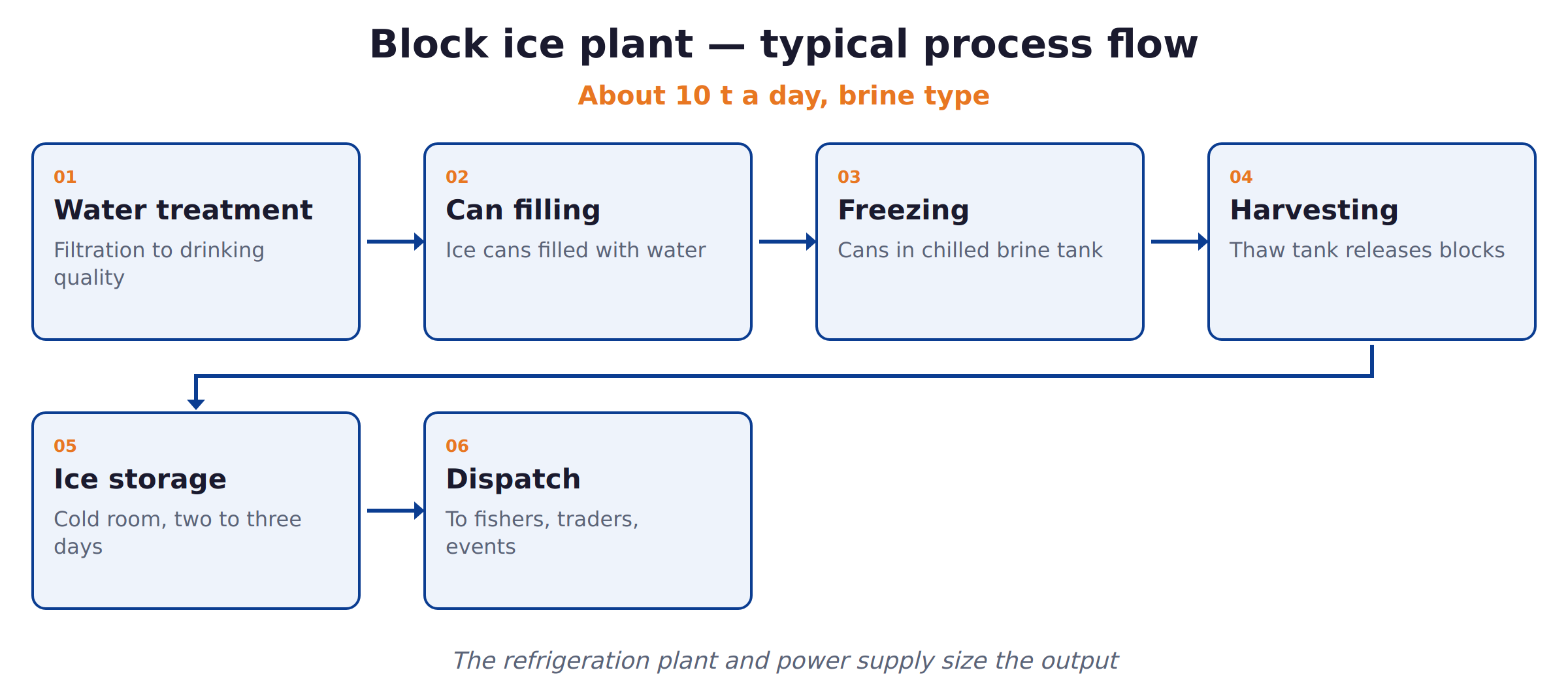
Cans or moulds filled with water sit in a tank of chilled brine or are frozen directly. After a freezing cycle of hours, blocks are released and stored. Block ice plants are simple and robust, and blocks travel well, but production is in batches and the blocks are heavy to handle.
Tube ice
Water flows down the inside of vertical tubes in an evaporator; ice forms on the tube walls, is released by a short warm cycle, and is cut into short cylinders. Tube ice is made continuously, is clear and hard, and bags well. Tube ice plants usually come with a bagging and sealing machine and need a cold room for bags.
Flake ice
Water is sprayed onto the inside of a refrigerated drum; a scraper removes thin flakes as they freeze. Flake ice cools product quickly because of its large surface, and does not damage delicate fish. It is used close to where it is made, from an insulated bin.
Energy and running costs
Ice making is energy-intensive, and electricity is usually the largest running cost after labour. Eskom's standard tariff rose 8.76% for 2026/27. Energy per tonne depends on the ice type, the water temperature going in and the condensing temperature on a hot day. Ask suppliers for kWh per tonne of ice at your summer conditions, and include the cold room that holds bagged ice. Pre-cooling feed water and good insulation cut the bill.
Storage and transport decide the market
Ice melts from the moment it is made. Block ice can be trucked further and held in insulated containers for longer; bagged tube ice needs a cold room and refrigerated or insulated delivery; flake ice is used on site. Before choosing a plant, plan how ice reaches customers on the hottest day of the year.
Water, hygiene and refrigerants
Ice that touches food or drink is a food. Use water that meets SANS 241, treat it where needed, and keep the ice plant, bagging area and store within a food premises meeting R638 with a Certificate of Acceptability. Bagged ice sold to the public is a prepackaged food and must be labelled under R146. Refrigeration work must be done by authorised persons registered with SAQCC Gas, and HCFC refrigerants such as R22 are being phased out under the ozone-depleting substances regulations, so new plants should use other refrigerants. Ice machines under 8418.69.90 enter duty-free; VAT applies.
Match the plant to your customers
- Coastal fish traders and boats: block ice, with crushing.
- Bottle stores, filling stations and events in town: tube ice with bagging and a cold room.
- Fish counters and meat or poultry processors: flake ice beside the line.
- Mixed customers: a tube ice plant for retail with a smaller flake ice machine for processors, or block ice crushed for bags.
Worked example: a coastal ice business
A business in the Eastern Cape sells crushed block ice to fish traders and small boats from a brine block ice plant of about 10 tonnes a day. Bottle stores and event organisers in the nearby town ask for clear bagged ice. The owner adds a tube ice machine with a bagger and a small cold room, and runs a refrigerated bakkie into town on weekends and holidays, while block ice continues for the harbour. The figures are illustrative.
Five questions before you buy
- Who are your customers, and what ice do they ask for?
- How many tonnes a day at peak, such as summer weekends and holidays?
- How will ice reach customers, and how far?
- What is the kWh per tonne at your summer temperature?
- Who will service the refrigeration, and what spares are held locally?
Common mistakes
- Selling flake ice for drinks.
- Tube ice without a cold room for bags.
- Sizing for an average day, not a December weekend.
- Water that does not meet drinking standards.
- Ignoring electricity in the price per bag.
Storage, bagging and delivery
Ice making is only half of an ice business. Tube and cube ice need an insulated bin or cold room at below freezing so that the ice does not stick together, a bagging station with a sealer, and a freezer for bagged stock. Block ice is stored stacked in a cold room and wrapped or sold loose. Flake ice is usually used straight away at fish markets, bakeries and processing plants, so storage is short. Delivery matters too: insulated vehicles or chest freezers at shops keep ice from melting before it is sold. Count energy for storage as well as for making ice, and size the store for your busiest weekend rather than an average day.
For a retail ice business, tube or cube ice in bags usually sells best; for fish, meat and concrete cooling, flake or block ice is the working choice.
Water quality for ice
Ice is food when it goes into drinks or onto fish, so the water must be safe. Filter it, and soften hard water where needed: hardness leaves scale on evaporators and cuts output. Clean and sanitise the machine, bins and scoops on a schedule, keep staff hygiene strict in the bagging area, and test the ice from time to time at a laboratory. Bagged ice for retail must be labelled with the product name, net quantity and your details.
Where CISH fits
We supply complete ice plants, water treatment, ice machines, bagging and cold storage, from audited factories in China, sized to your customers and tonnes. CISH ships, clears, installs and commissions the plant with registered refrigeration technicians, and trains your team. For a single small cube ice machine for a bar or shop, a local supplier is usually the better buy.
Frequently asked questions
What is the difference between block, tube and flake ice?
Block ice is large solid blocks that last longest; tube ice is clear hollow cylinders for drinks and retail; flake ice is soft flakes for cooling food and processing.
Which ice is best for selling to bottle stores?
Tube ice, bagged and stored in a cold room.
Which ice is best for fish?
Flake ice for fish counters and processing; block ice for boats and long trips.
How much does an ice plant cost?
As an indication for 2026, a 10 t/day brine block ice machine costs about US$10,000–45,000 ex-works; tube and flake ice plants are quoted per configuration.
Is bagged ice regulated as food?
Yes. It must be made from drinking-quality water in a food premises and labelled as a prepackaged food.
Does CISH supply ice plants?
Yes, complete plants with storage, commissioning and training.