Wet-cast pavers are poured into plastic or rubber moulds on a vibrating table and demoulded the next day; the equipment is low cost and the pavers can look decorative, but output is limited by the number of moulds, and the method suits garden and decorative paving rather than roads. Pressed (dry-cast) pavers are made on a block machine fitted with paver moulds, using a stiff mix that is vibrated and compressed, often with a coloured face mix; they are stronger and more consistent, and are what driveways, parking areas and municipal projects usually specify under SANS 1058. As an indication for 2026, a manual or mobile machine costs about US$8,000–40,000 (a whole yard under about US$80,000), a semi-automatic static plant with mixer and pallet handling about US$120,000–450,000 landed and commissioned, and a fully automatic plant about US$600,000–1.5 million or more. Cement, sand, stone and iron oxide pigment are most of the cost, and curing decides strength. CISH supplies, installs and commissions complete semi-automatic and automatic paver plants.
Step 1: wet-cast or pressed?
| Wet-cast pavers | Pressed (dry-cast) pavers | |
|---|---|---|
| Method | Fluid concrete poured into moulds, vibrated, left to set | Stiff mix vibrated and compacted in a steel mould on a machine |
| Equipment | Moulds, vibrating table, mixer | Block machine with paver moulds, pan mixer, pallets |
| Output | Limited by number of moulds | High and repeatable |
| Look | Decorative textures, stone and wood finishes | Standard shapes, coloured faces, smooth or textured |
| Strength and consistency | Variable | Higher; suited to SANS 1058 |
| Market | Gardens, patios, decorative projects | Driveways, parking, commercial and municipal work |
| Investment | Low | Moderate to high |
Many small businesses start wet-cast for garden paving and move to pressed pavers when they want contractor and municipal work.
Step 2: know the standard
SANS 1058 is the South African standard for concrete paving blocks; it covers strength classes, abrasion resistance and dimensional tolerances. Municipal and commercial tenders usually require pavers that meet SANS 1058 and ask for test certificates. Kerbs follow SANS 927. The Concrete Manufacturers Association publishes technical guidance, and its certification arm lists the specifications for concrete products. Test your pavers at an accredited laboratory before you bid.
Step 3: choose your market
- Homeowners and landscapers: driveways, patios, pool surrounds; colour and pattern matter.
- Builders and developers: housing estates and townhouses; price and delivery matter.
- Commercial: parking areas, shopping centres, fuel stations; strength and consistency matter.
- Municipal and provincial: sidewalks, taxi ranks, roads; SANS 1058 certificates and tender compliance matter. Public housing and infrastructure budgets, such as the Department of Human Settlements' 2026/27 budget of about R26.97 billion, drive part of the demand.
Step 4: equipment and costs
| Class | Output | Indicative price (2026) | Fits |
|---|---|---|---|
| Wet-cast moulds and vibrating table | By number of moulds | Low cost | Garden and decorative pavers |
| Manual or mobile machine | Small | About US$8,000–40,000; whole yard under about US$80,000 | Start-up yards |
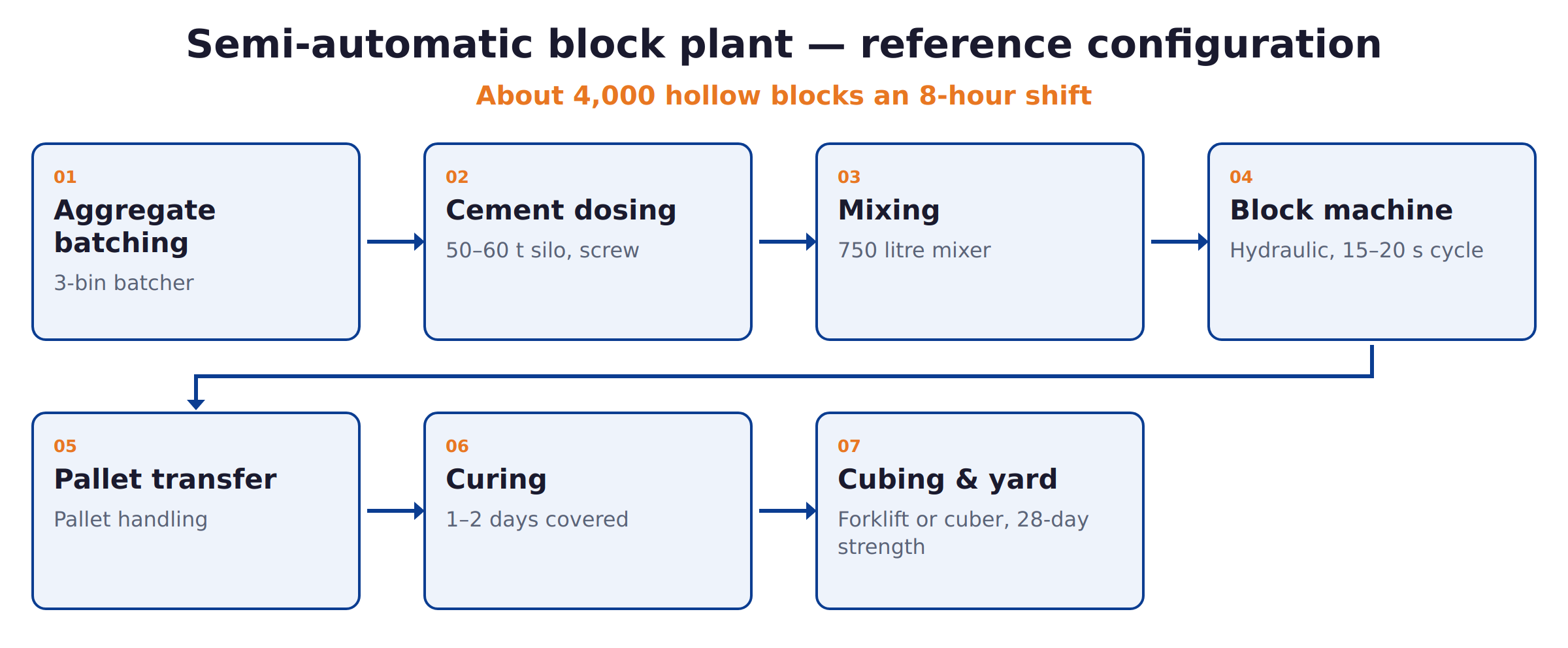
| Semi-automatic static plant | Hundreds of square metres a day | About US$120,000–450,000 landed and commissioned | Contractors, developers, tenders |
| Fully automatic plant | Large volumes | About US$600,000–1.5 million+ (civils extra) | Regional suppliers, large tenders |
A pressed paver plant needs a pan or planetary mixer for consistent mixing, a face-mix hopper for coloured pavers, accurate weighing, pallets and a curing area. Our paving brick machine price guide sets out the bands, and our brick machine selection guide compares machine classes. Block and paver machines under 8474.80 enter duty-free.
Step 5: materials and colour
Cement, sand and crushed stone make up most of the cost; buy from reliable suppliers and test the aggregates. Colour comes from iron oxide pigments, usually added only to a face mix on top of a grey backing mix to save pigment. Keep pigment dosing accurate and consistent between batches, because customers notice colour differences across a driveway.
Step 6: curing and stock
Pavers gain strength over days and weeks. Keep fresh pavers moist and protected from sun and wind, cure on pallets or racks, then stack and wrap them for delivery. Hold enough stock to supply a full driveway or project in one colour batch. Plan a yard with a curing area, stockpiles and access for trucks with cranes.
Step 7: the numbers
Work out materials per square metre, labour, power, pallets, curing space, delivery, breakages and margin. Sell by the square metre, and price delivery and laying separately if you offer them. Many paving businesses earn more from laying than from making; decide whether you will lay or supply layers.
Worked example: from wet-cast to pressed pavers
A landscaper in the Western Cape makes wet-cast garden pavers in 400 moulds and lays them for homeowners. A developer asks for 6,000 m² of 60 mm pavers to SANS 1058 for a townhouse estate. The business leases a yard, installs a semi-automatic static plant with paver moulds, a pan mixer, a face-mix hopper and a pallet handling system, sends samples for testing, and builds stock in two colours. It keeps the wet-cast moulds for decorative products. The figures are illustrative.
From a delivered project: A regional developer asked for a 12,000 blocks-a-day automatic plant; sized to real off-take, the plant built was about 6,500 blocks a day over two shifts, online in 22 weeks and at 78% effective utilisation within three months. Read the block and paver plant case study.
Common mistakes
- Selling wet-cast pavers for driveways that carry vehicles.
- No testing before bidding on tenders.
- Inconsistent colour batches.
- Poor curing in hot, windy weather.
- No stock for a full project.
Laying and installation
Many paving businesses earn as much from laying as from making. A laying team needs a plate compactor, cutting equipment, string lines, levels, and sand and edging materials, plus training in base preparation, because most paving failures come from a poor base, not poor pavers. If you do not lay, build relationships with independent paving contractors who will buy from you and recommend you.
Quality testing in the yard
Test samples from every production week for strength and dimensions, and keep the results. Check colour against a reference board under daylight, and inspect edges and corners for chipping before packing. Pavers that fail quality checks can go to lower-value uses such as garden paths, rather than to driveways or tenders.
Moulds and maintenance
Paver moulds wear with every cycle, and worn moulds make pavers with rough edges and wrong dimensions. Record mould cycles, inspect them regularly and budget for replacement. Keep the machine's vibration system, hydraulics and pallets maintained, because they decide compaction and strength.
Seasons and weather
Paving sales rise in dry months, when homeowners and contractors lay driveways and patios, and fall in heavy rain. Build stock before the busy season, protect fresh pavers from rain and frost, and plan maintenance and mould changes for the quiet months. Cold weather slows curing, so allow more time before stacking and delivery.
Where CISH fits
We supply complete paver plants, mixers, batching, block machines with paver moulds, face-mix systems, pallet handling and curing, from audited factories in China, sized to your square metres a day. CISH ships, clears, installs and commissions the plant on your mix, and trains your operators. For wet-cast moulds or a manual machine, a local supplier is usually the better buy.
Rubber crumb can feed rubber pavers; see how to start a tyre recycling business for the crumb side.
Frequently asked questions
How much does it cost to start a paving brick business?
Wet-cast paving can start with moulds and a vibrating table at low cost. Pressed pavers need a machine: manual or mobile machines cost about US$8,000–40,000, and semi-automatic plants about US$120,000–450,000 landed and commissioned.
What standard do pavers need to meet?
Concrete paving blocks should meet SANS 1058, which covers strength, abrasion resistance and dimensions.
Are wet-cast pavers strong enough for driveways?
Usually not for heavy use. Pressed pavers made to SANS 1058 are the usual choice for driveways and roads.
How do I colour pavers?
With iron oxide pigments, usually in a face mix on top of a grey backing mix.
Can a block machine make pavers?
Yes. Most block machines make pavers with a paver mould and a face-mix hopper.
Does CISH supply paver plants?
Yes, semi-automatic and automatic plants with commissioning and training.